Leather Vest Care: A Motorcycle Rider’s Guide
31st May 2026
Let’s be honest about something right off the bat: nobody buys a leather vest thinking about the maintenance. You buy it because it looks good, it offers a bit of protection, and it’s the perfect place to display your patches and club colours. It’s a staple of the riding wardrobe, especially here in Australia where the weather can flip from baking sun to pouring rain in the span of an afternoon ride.
But here is the reality check. A good quality leather vest is an investment. As we all know, leather is a complex natural material. Making sure that it’s kept in perfect condition can indeed be difficult. That’s why we have gathered some proven tips for taking care of your motorcycle vest.
 Understanding What You’re Wearing
To take good care of leather, one needs to know its characteristics. Although it is strong and porous, it absorbs exhaust, dust, rain, and sweat. With time, oils evaporate, making it stiff, while dirt settles, damaging the fibers.
Have a look at our Dawson Suede Vest with Black and White Spanish Leather Braiding - It is made from high quality soft cowhide suede leather. There is black and white leather Spanish style braiding around the neck, arms, front and bottom.
The Breaking-In Period
If your vest is brand new, it probably feels a bit stiff. That’s normal. A lot of riders make the mistake of trying to rush this process by soaking it or using harsh chemicals to soften it up. Don't do that.
The best way to break in a vest is just to wear it. Ride in it. Wear it around the house if you have to. The heat from your body and the movement will naturally loosen up the fibers and mold the leather to your shape. It’s a process, not a shortcut.
Cleaning: Getting the Road Off
You get back from a long weekend ride, and your vest is covered in a layer of dust and a graveyard of insects.Don't use harsh solvents or household cleaners like Windex. Those will strip the finish and dry out the leather instantly.
For 90% of cleaning, all you need is a damp cloth. Microfiber is great because it grabs the dust without scratching.
- The Wipe Down: Dip your cloth in lukewarm water and wring it out until it’s just damp. Wipe down the entire vest to remove surface dust.
- Bug Removal: For dried-on bugs, don’t scrub aggressively. Lay a warm, damp cloth over the spot for a minute or two to rehydrate the mess, then gently wipe it away.
- Soap: If it’s really grimy, you can use a specific leather cleaner or a very mild soap (like a gentle baby soap), but use it sparingly. You don’t want soapy residue left behind.
 If you have embroidered patches, be careful cleaning around them. Dab them gently if they need cleaning, but try to keep the leather cleaner off the embroidery.
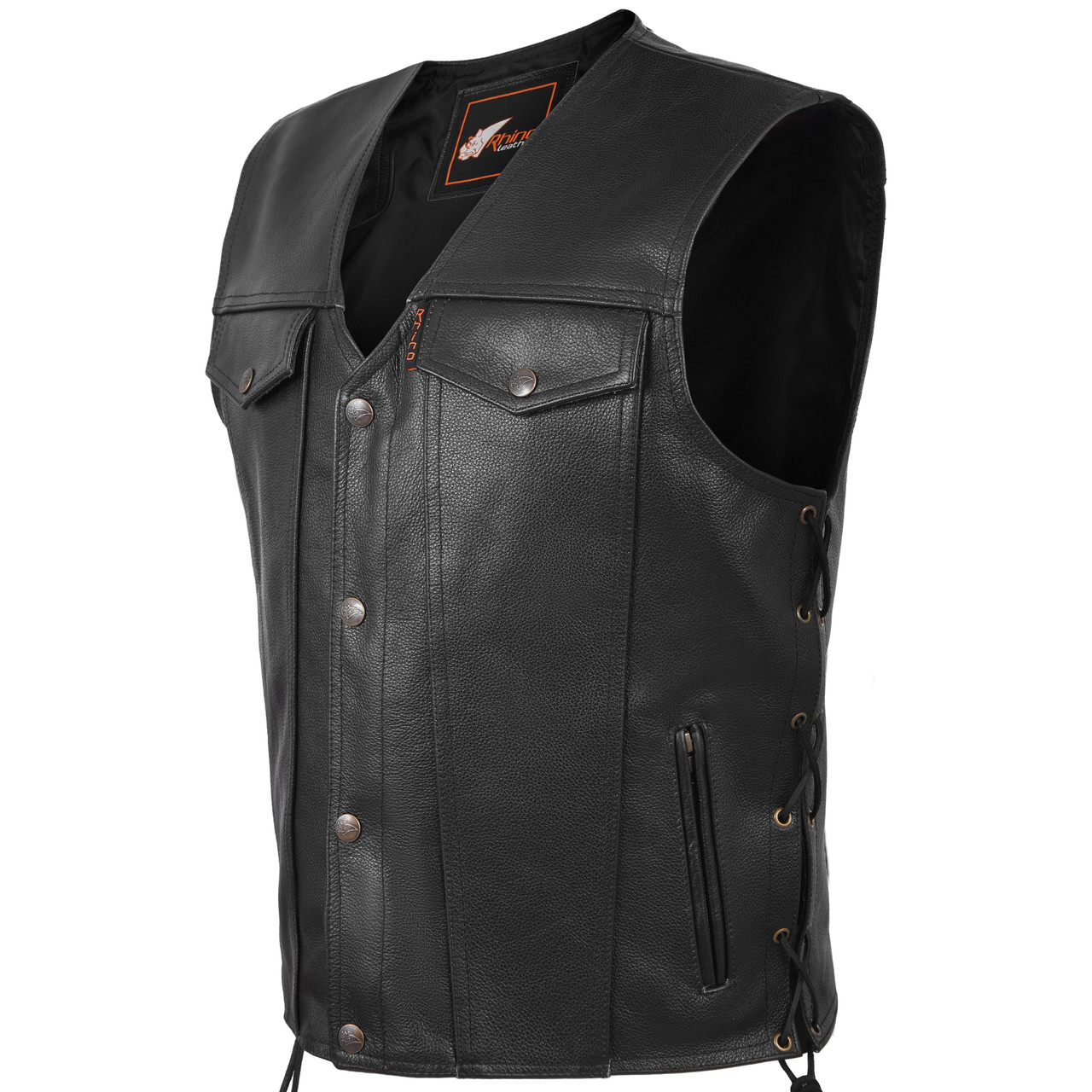
Try Out Rhino’s Mens Denim Style Buffalo Leather Vest with Side Lace - It is made of 100% black leather and is designed to look like a traditional Denim Vest. The vest is double stitched for durability and fully lined with black polyester.
Conditioning: The Lifeblood of Leather
This is the step that separates the vests that last from the ones that die young. Conditioning replaces the lost oils.
- Oils (like Neatsfoot): These soak in deep and soften well, but they can darken the leather significantly and sometimes weaken the stitching if used too heavily.
- Balms and Creams: These are usually the best bet for vests. They sit on the surface a bit longer and polish up nicely without making the leather feel greasy.
- Waxes: Good for waterproofing, but they can build up over time.
 How to do it: Wait until your vest is clean and dry. Put a small amount of conditioner on a lint-free cloth (never pour it directly on the leather). Rub it using circular motions, working one panel at a time.
Don’t go crazy. The leather should look rich and hydrated, not wet or sticky. If it feels greasy after ten minutes, you’ve used too much. Wipe off the excess.
Check out our Maverick Buffalo Leather Vest with Metal Clasps - It is made from black buffalo leather and is double stitched for durability
Dealing with Water
Leather is pretty resilient to water, provided you handle the drying process correctly.
If your vest gets soaked:
- Hang it up immediately. Use a wide, sturdy hanger.
- Let it air dry. This is the golden rule. Do not put it in front of a heater, do not use a hair dryer, and do not throw it in the dryer.
- Patience. Rapid heat forces the water out too fast, taking the oils with it. This causes the leather to shrink and warp. Let it dry at room temperature, even if it takes two days.
 Once it’s dry, it will probably feel a bit stiff. That’s the time to hit it with a coat of conditioner to restore the flexibility.
Explore Rhino’s Atlas Blue Denim Motorcycle Vest - It is made of 12oz denim 100% durable cotton and keeps you feeling super cool in summer.
Storage: The Silent Killer
Believe it or not, more damage is done in the closet than on the road.
- The Hanger: Leather is heavy. If you hang it on a thin wire hanger, the weight will pull down on the shoulders, creating permanent "nipples" in the leather or stretching out the yoke. Invest in a wide, wooden suit hanger or a dedicated heavy-gear hanger.
- The Environment: Australia can get humid. If you stick your leather vest in the back of a dark, damp closet and forget about it for six months, you’re going to come back to a science experiment. Mold loves leather. It feeds on organic material.
Store it somewhere with decent airflow. If you use a cover, make sure it’s a breathable cotton bag, never plastic. Plastic traps moisture and promotes mold growth.
A Quick Word on Zippers and Snaps
While you’re caring for the hide, don’t forget the hardware. Metal snaps can corrode, and zippers can seize up with road grime.
A tiny drop of silicone lubricant or even rubbing a pencil tip (graphite) along the zipper teeth can keep things running smoothly. If you see green corrosion starting on your snaps (common near the ocean), brush it off with an old toothbrush and a little baking soda paste before it eats into the metal.
The Bottom Line
You don’t need to be a professional detailer to keep your vest alive. It really comes down to common sense. Keep it clean, keep it fed, and don’t cook it.
Your vest tells a story. Every scuff, every fade line, and every patch adds to that story. You want to keep the character, but lose the damage. Treat it with a bit of respect, and it’ll be the last thing you put on before every ride for decades to come.
Ride loud. Ride proud. Protect what represents you.
If you have your own tips to share or add in our list, feel free to buzz in the comment section below.